Why Some Dogs Never Learn to Catch
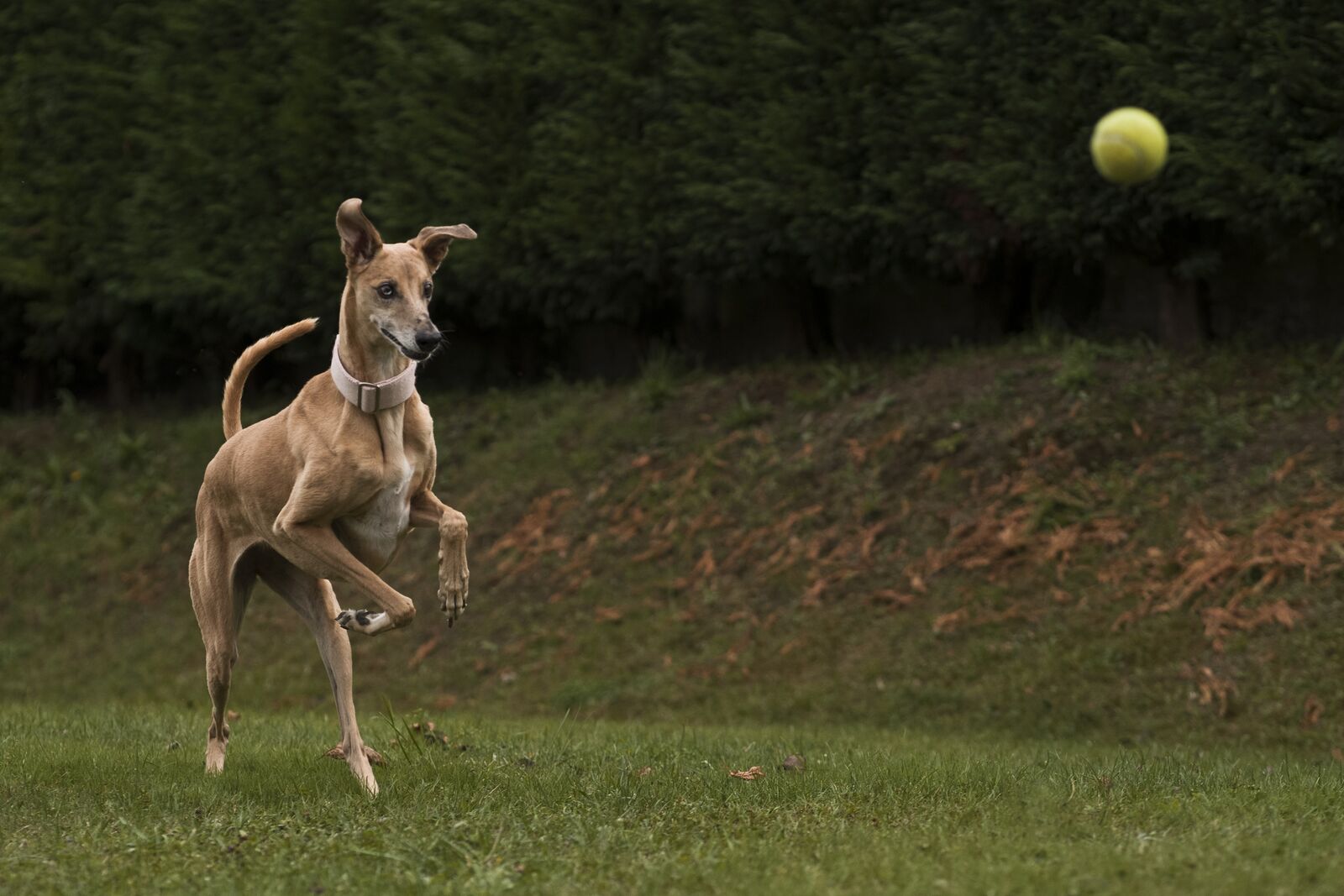
You toss a piece of popcorn in a gentle arc. Your dog watches it the whole way, perfectly still, and it bounces off her forehead. She then finds it on the floor in about half a second. If this is your house, you are in good company. Plenty of dogs never get the hang of catching, and it rarely has anything to do with how clever they are.
Part of it is probably how dogs see. Their eyes tend to sit further apart than ours, which buys a wide view of the world and, in most breeds, a smaller patch in the middle where both eyes overlap. That overlap is a big part of how distance gets judged up close. Dogs are also thought to see fine detail less sharply than we do, while being very good at noticing movement. A treat flying straight at the face is an awkward case: it hardly moves across the view at all, it just gets bigger, and for the last stretch it may be closer than a dog can comfortably focus. Many dogs seem to lose track of it right at the end.
Then there is practice. Catching is a timing skill, and timing gets learned by doing it badly a few hundred times. A dog who spent puppyhood chasing things that were thrown has had those repetitions. A dog whose games were tug, wrestling or following a smell along a fence has not, and has no particular reason to think that things in the air are worth opening a mouth for. Some dogs simply prefer the chase on the ground and will happily wait for the bounce.
Breed and build seem to matter too, though less than people expect. Dogs from lines bred to pick things up and carry them often take to catching early, and a long muzzle gives a little more room for error than a short one. Dogs with flatter faces have a smaller target to work with. But there are retrievers who cannot catch a thing and bulldogs who almost never miss, so treat this as a nudge and not a rule.
Excitement might be the most common culprit. A dog who is thrilled about the treat often watches your hand or your face, not the thing leaving it, and then jumps early or snaps a beat too soon. Calm dogs tend to catch better than eager ones, which feels a bit unfair on the eager ones.
If you want to help, make it easy: something light and soft, lobbed slowly from close by, in a high arc that crosses in front of the nose and does not come straight at it. Keep it short and cheerful. And if it never clicks, that is fine. The treat ends up in the same place either way.